Reading the water before you cast
A minute spent studying the surface, the shoreline and the likely shape of the bottom can make the next hour of spinning far more focused.
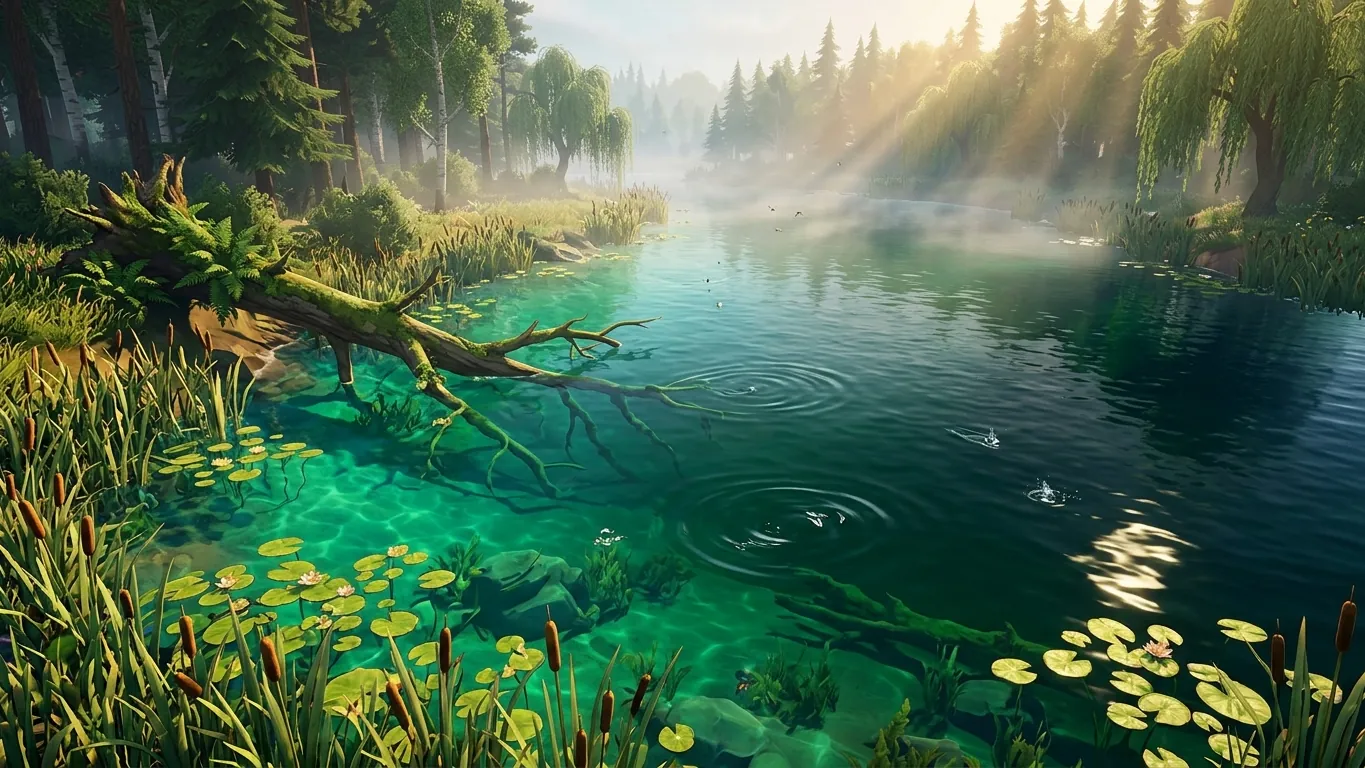
Look before you cast
A new location in Fishing Planet can feel overwhelming: a wide lake, a winding river or a long shoreline with no obvious starting point. The temptation is to cast straight away. Taking a minute to read the water first often saves far more time than it costs.
Reading the water means gathering clues from what you can see and inferring what lies below. It is the same skill real anglers use, and it translates well to the game, where predators tend to relate to features, depth and conditions rather than spreading evenly through open water.
Surface clues worth noticing
The surface offers more information than it first seems. Reeds and lily pads mark shallow, weedy margins. A change in the colour of the water can indicate a shift in depth or the edge of a weed bed. Ripples on calm water may show current seams, inflows or small fish moving near the top. Fallen trees reaching into the water usually continue below the surface, offering cover for predators.
Points of land that stick out into the water often continue underwater as a ridge or slope. Bays and inlets tend to be sheltered from wind. Each of these clues suggests a starting spot and a lure to try there.
Picturing the bottom contour
Below the surface, the shape of the bottom matters most. Try to imagine a cross-section of the water in front of you: a shallow shelf near the bank, a slope, then a deeper basin. On a river, picture the main channel with shallower edges and slower water behind bends and obstacles.
A simple diagram helps. Draw the bank on the left, the shelf as a flat line, the drop-off as a diagonal and the deep water as a lower flat line. Predators often sit along that diagonal, moving up to feed and down to rest. Your casts should aim to bring the lure through that zone.
Where depth information is available, use it to confirm your sketch. Otherwise, count your lure down and note how long it takes to reach the bottom at different distances from the bank.
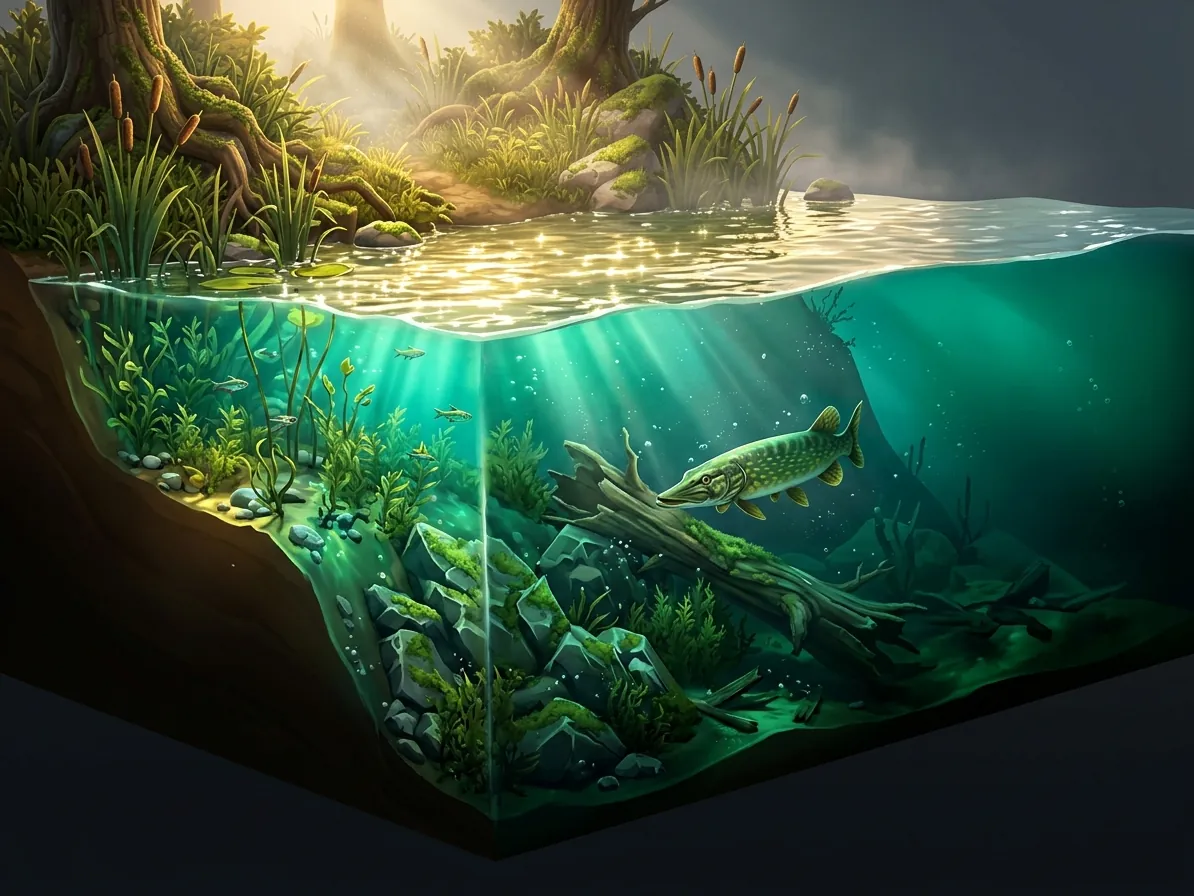
Weed, wood and rock: three kinds of cover
Weed beds provide shade and shelter for small fish, which draws predators to their edges. Fish weedless soft plastics through gaps or run shallow lures along the outer line.
Wood, such as fallen trees and submerged branches, is classic ambush cover. It also snags lures easily, so slower, more controlled presentations usually work better than fast cranking.
Rock and gravel areas often hold fish near the bottom, especially where rock meets sand or mud. Jigs hopped across that transition are a sensible choice. Treat each type of cover as a question: which lure can reach the fish here without getting stuck?
Light, weather and time of day
Conditions shape how fish use these features. In bright light, many predators retreat to shade, deeper water or thick cover. In low light, at dawn and dusk or under heavy cloud, they may move into shallower water to hunt more openly. Wind can push food toward one shore and add surface chop that makes fish less wary.
When conditions change during a session, revisit your read of the water. A spot that was quiet at midday may be worth another look as the light fades.
A simple sketch-map habit
One practical habit is to keep a rough sketch map of each location you fish often: banks, points, weed beds, timber and the drop-offs you have found. Mark where you have had bites and under what conditions. Over a few sessions the sketch becomes a personal guide that no general article can replace.
It also makes your sessions more deliberate. Instead of wandering, you arrive with a plan: start at the point in the morning, move to the sheltered bay as the wind rises, finish along the reed line at dusk. Plans like that will not always work, but each one teaches you something about the water.
Related articles
 Balancing your spinning tackle
How to balance rod, reel, line and leader for spinning in Fishing Planet, with a quick pre-session checklist for casting weight and drag.
Read more
 Four spinning situations, broken down
Four common spinning situations in Fishing Planet explained: follows without strikes, constant snags, lost fish and long quiet spells.
Read more
 The case for slower spinning sessions
An opinion piece on why a slower, more deliberate spinning style in Fishing Planet can teach more about lures, retrieves and fish behaviour.
Read more