Where predators wait
Predatory fish rarely sit in random places. This guide explains how structure, depth and edges point you toward them, with a simple routine for searching any new spot.
Think like an ambush hunter
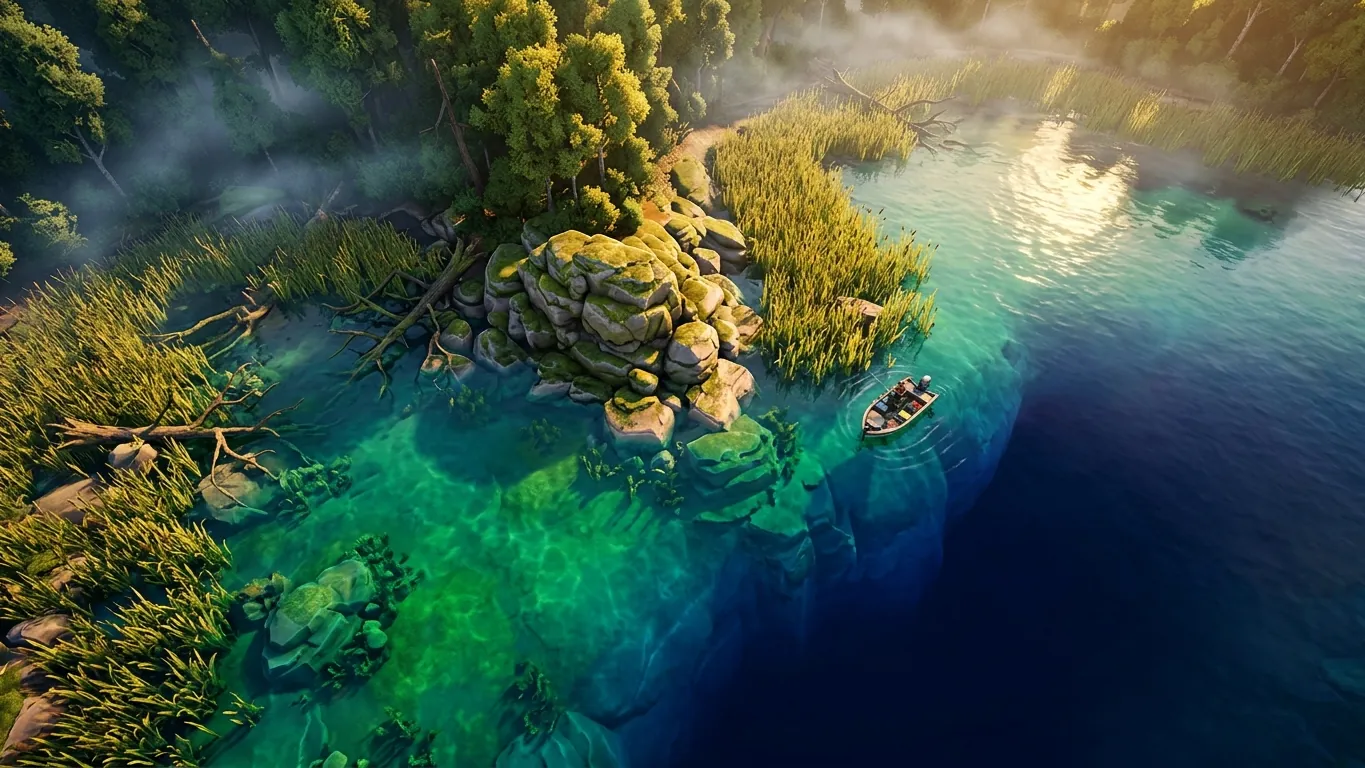
Most predatory fish targeted with spinning gear are ambush or patrol hunters. They spend energy carefully, waiting near cover or cruising along edges where smaller fish pass by. In Fishing Planet, as on real water, a reliable way to find them is to ask where food would gather and where a predator could hide close to it.
This changes how you look at a new location. Open, featureless water may look inviting, but transition zones are often more promising: where shallow meets deep, where weed meets open water, or where current meets slack water. Picture a map of the area with these lines drawn on it, and you already have a list of places to cast.
Structure that holds predators
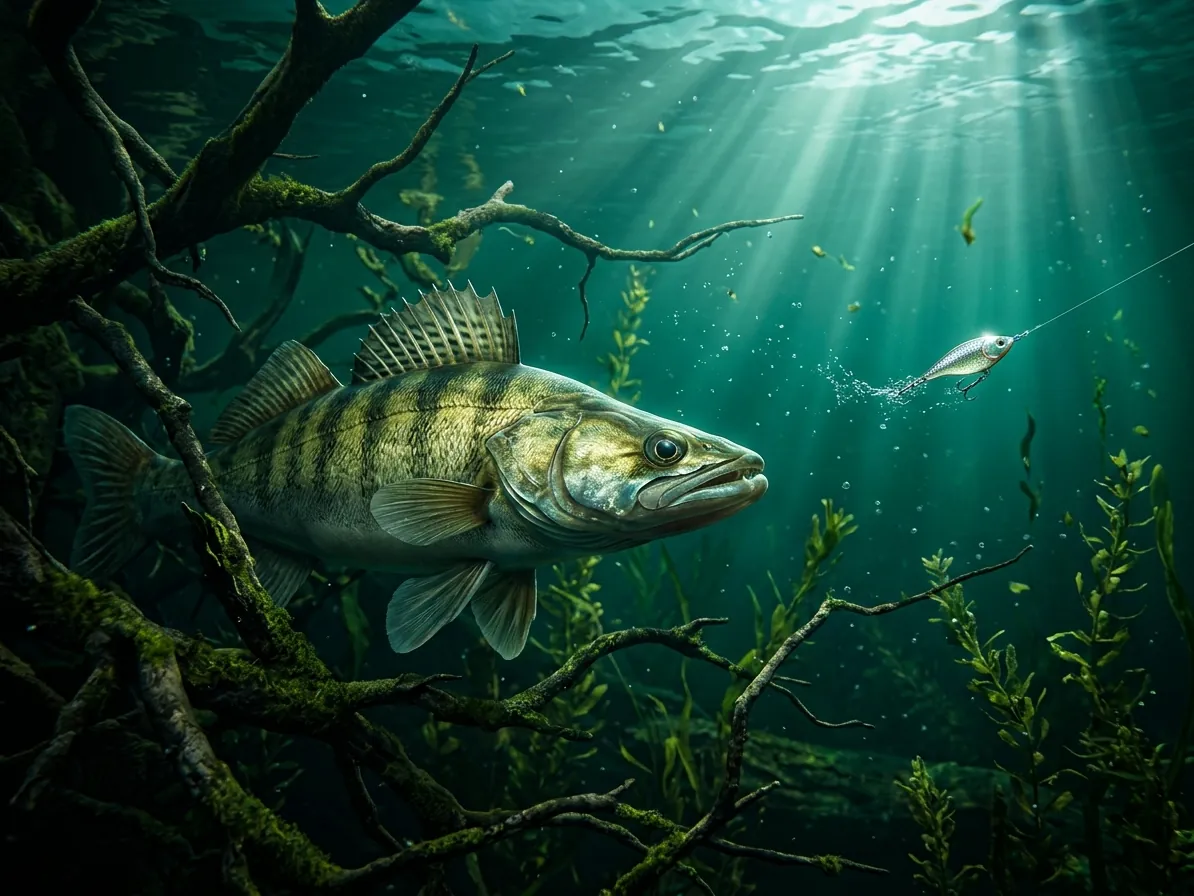
Structure is any feature that breaks up the underwater landscape. Fallen trees, rocky points, weed beds, reed lines, piers and submerged channels all offer shelter and ambush points.
Each type suggests a lure and an approach. Along reed lines and weed edges, a spinner or shallow wobbler retrieved parallel to the edge keeps the lure in the strike zone for longer. Around wood and rocks, soft plastics fished slowly reduce snags while still reaching the fish. Over the top of submerged weed, a topwater lure or a shallow-running bait avoids getting caught up.
Casting parallel to structure rather than straight at it is one of the most useful habits you can build. A straight cast crosses the strike zone for only a moment; a parallel one stays in it.
Depth and the drop-off
Depth is the other half of the puzzle. Many predators move between shallow and deeper water depending on light, temperature and the time of day. A drop-off, where the bottom slopes quickly from shallow to deep, gives them access to both with little effort.
To work a drop-off, position yourself so you can cast across it, then let your lure follow the slope back toward you. A crankbait diving down the edge, or a jig hopping down step by step, covers each depth band in turn. When you get a bite, note the depth and try to repeat it on the next casts.
If depth information is available at your spot, use it to find where the slope begins rather than guessing. If not, count your lure down and note how long it takes to touch bottom at different distances.
A search routine for a new spinning spot
Use this routine whenever you arrive at unfamiliar water. It keeps your casts organised and your observations useful.
- 01
Scan the visible features
Before casting, look for reeds, fallen timber, rocks, points and changes in surface texture. Choose two or three likely areas rather than casting everywhere.
- 02
Fan-cast with a search lure
Use a spoon or spinner and cast in a fan pattern, covering the area in evenly spaced lines from left to right.
- 03
Check different depths
Repeat the fan at a deeper layer by counting the lure down longer before retrieving, or switch to a deeper-running wobbler.
- 04
Slow down where you get interest
When you see a follow or feel a bite, switch to a slower, more precise presentation such as stop-and-go or a soft plastic.
- 05
Note what worked
Keep a quick note of the spot, depth, lure and retrieve, so you can return to the pattern later.
Knowing when to move on
Persistence is valuable, but so is mobility. If you have covered a spot thoroughly with two or three lure types at several depths and seen no interest, moving to a different feature is usually a better use of time than repeating the same casts.
A helpful approach is to set yourself a limit before you start, such as a certain number of casts per area. When you reach it, move on. Over a session, this shows you more of the water and helps you find where active fish are, rather than waiting for them to come to you.
Finding predators is ultimately about reading clues and testing ideas. The more spots you study with a clear routine, the faster the patterns start to make sense, and the more confident each new location will feel.
Related articles
 Beginner spinning mistakes worth fixing early
The most common mistakes new spinning players make in Fishing Planet, from fast retrieves to poor drag settings, and how to fix each one.
Read more
 Reading the water before you cast
How to read the water in Fishing Planet before casting: surface clues, bottom contours, cover types, light and a simple sketch-map habit.
Read more
 Balancing your spinning tackle
How to balance rod, reel, line and leader for spinning in Fishing Planet, with a quick pre-session checklist for casting weight and drag.
Read more