Spoons
Compact, weighty and easy to cast long distances. They flutter as they sink and wobble on the retrieve, which makes them a flexible choice for searching open water at several depths.
A practical look at the main lure families for virtual spinning and how to match them to depth, water clarity and the predator you are after.
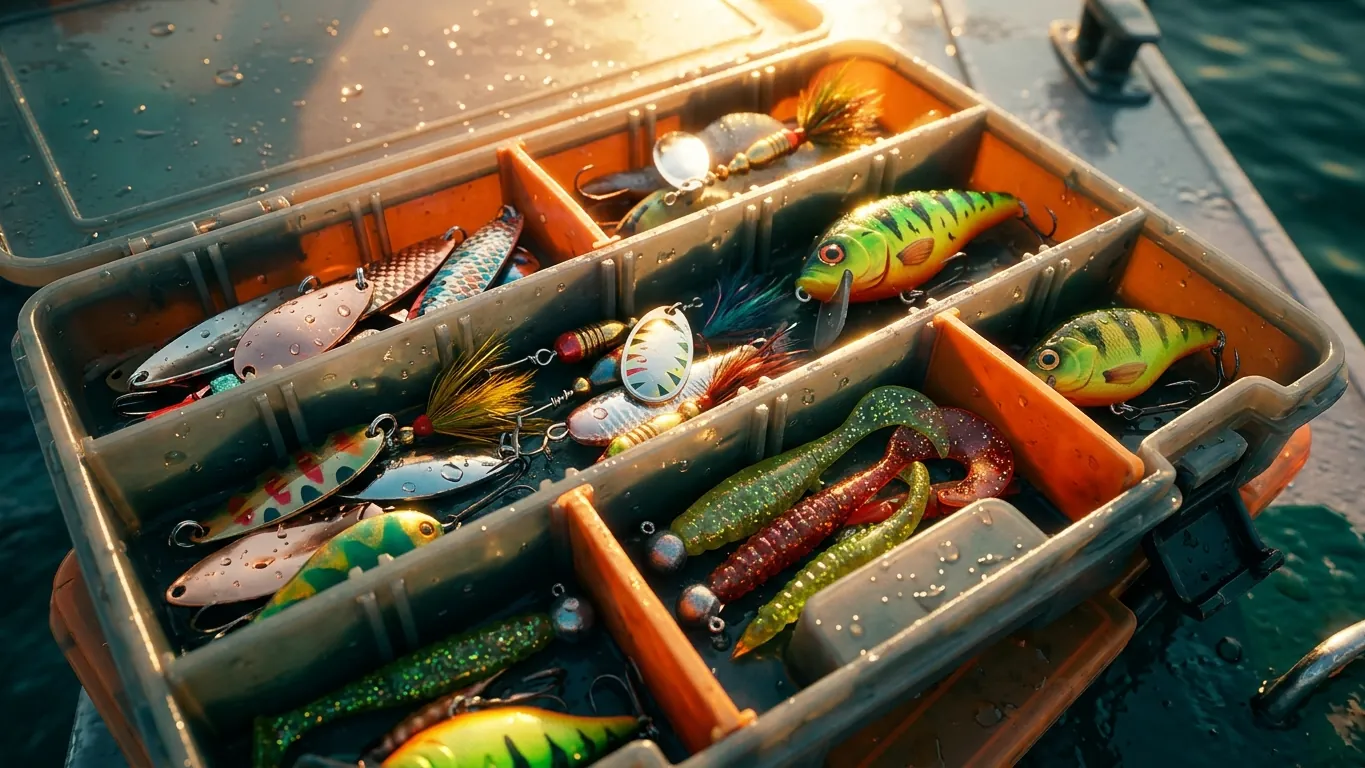
It is easy to open a tackle box in Fishing Planet and pick whatever looks most impressive. A more reliable habit is to ask three questions first: which predator am I targeting, at what depth is it likely to be, and how clear is the water? The answers narrow a crowded box down to a handful of sensible options.
A lure is really a tool for presenting movement at a particular depth and speed. A shallow-running wobbler and a heavy spoon can both catch the same species, but they do it in different parts of the water column. When a session goes quiet, swapping to a lure that works a different layer often tells you more than swapping colours.
Throughout this guide, picture the water as stacked bands: the surface, the upper mid-water, the lower mid-water and the bottom. Every lure family has a band where it feels most at home.
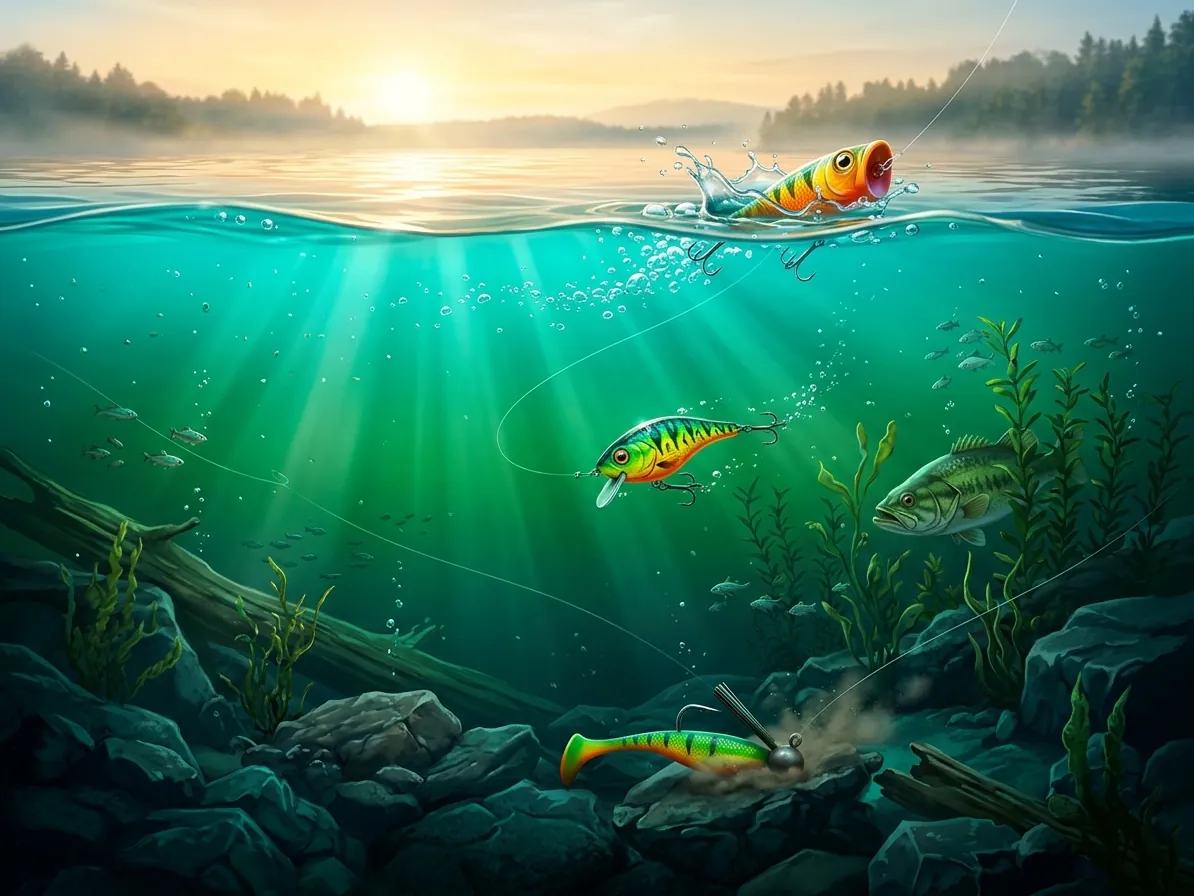
Each family has its own strengths. Knowing them well matters more than owning many of them.
Compact, weighty and easy to cast long distances. They flutter as they sink and wobble on the retrieve, which makes them a flexible choice for searching open water at several depths.
A rotating blade creates flash and vibration. They suit steady retrieves in shallow to medium depths and are forgiving for players still learning reel speed.
The lip largely decides how deep they dive. Short lips stay shallow and long lips dig deeper, which helps you work a specific band along a drop-off.
Worms, grubs and shad bodies on a weighted hook. They shine near the bottom with lift-and-drop retrieves, and changing the jig head weight lets you match depth and current.
Poppers and walking baits that stay on the surface. They are most useful in calm conditions and low light, when predators look upward for an easy meal.
Size is one of the clearest levers you have. Small spinners and light spoons tend to attract a wide range of fish, including smaller predators that can crowd out the bigger targets. Moving up in size filters the bites: fewer fish may show interest, but those that do are more likely to be the larger predators you came for.
There is a trade-off. Bigger lures need a rod rated to cast them comfortably, and heavier lures sink faster, which can change the depth you are fishing without you noticing. If you increase lure size, check that your rod's casting weight still fits and adjust your retrieve speed to keep the lure in the same band.
A practical rule many players use is to begin with a medium size for the species, then go smaller if nothing responds and larger if you are catching only small fish.
Colour choice is often overthought, but it still has a role. In clear water and bright light, natural tones such as silver, olive and brown tend to look convincing. In stained or murky water, or under heavy cloud, brighter colours and stronger flash can help a lure stand out.
Instead of collecting dozens of shades, keep one natural and one bright version of your most-used lures. When the light changes during a session, for example as evening approaches, that pair lets you test a contrast change in one swap rather than ten.
Remember that colour is a fine adjustment. If fish are not responding at all, depth and retrieve speed are usually the bigger issues.
A focused selection makes decisions quicker and helps you learn how each lure behaves. A useful starting kit for spinning could include a mid-weight spoon for long searching casts, an inline spinner for shallow edges, a shallow and a deep wobbler for working specific depths, and a few soft plastics with two or three jig head weights.
With that range you can cover almost every band of the water column. Spend time with each lure before adding more. Watch how fast a spoon sinks on a slack line, how deep a wobbler runs at a steady pace and how a soft plastic falls after each lift. That knowledge is worth more than a full box of untested lures.
As your experience grows, add lures to solve a specific problem you have run into, such as a weedy bay that calls for a weedless soft plastic or a deep hole that needs a heavier jig head.
 Spinning retrieve styles, drawn out
A practical breakdown of spinning retrieves in Fishing Planet, from steady and stop-and-go to twitching and lift-and-drop, with simple path diagrams.
Read more
 Where predators wait
Learn where predatory fish hold in Fishing Planet: structure, drop-offs and a step-by-step search routine for any new spinning location.
Read more
 Beginner spinning mistakes worth fixing early
The most common mistakes new spinning players make in Fishing Planet, from fast retrieves to poor drag settings, and how to fix each one.
Read more